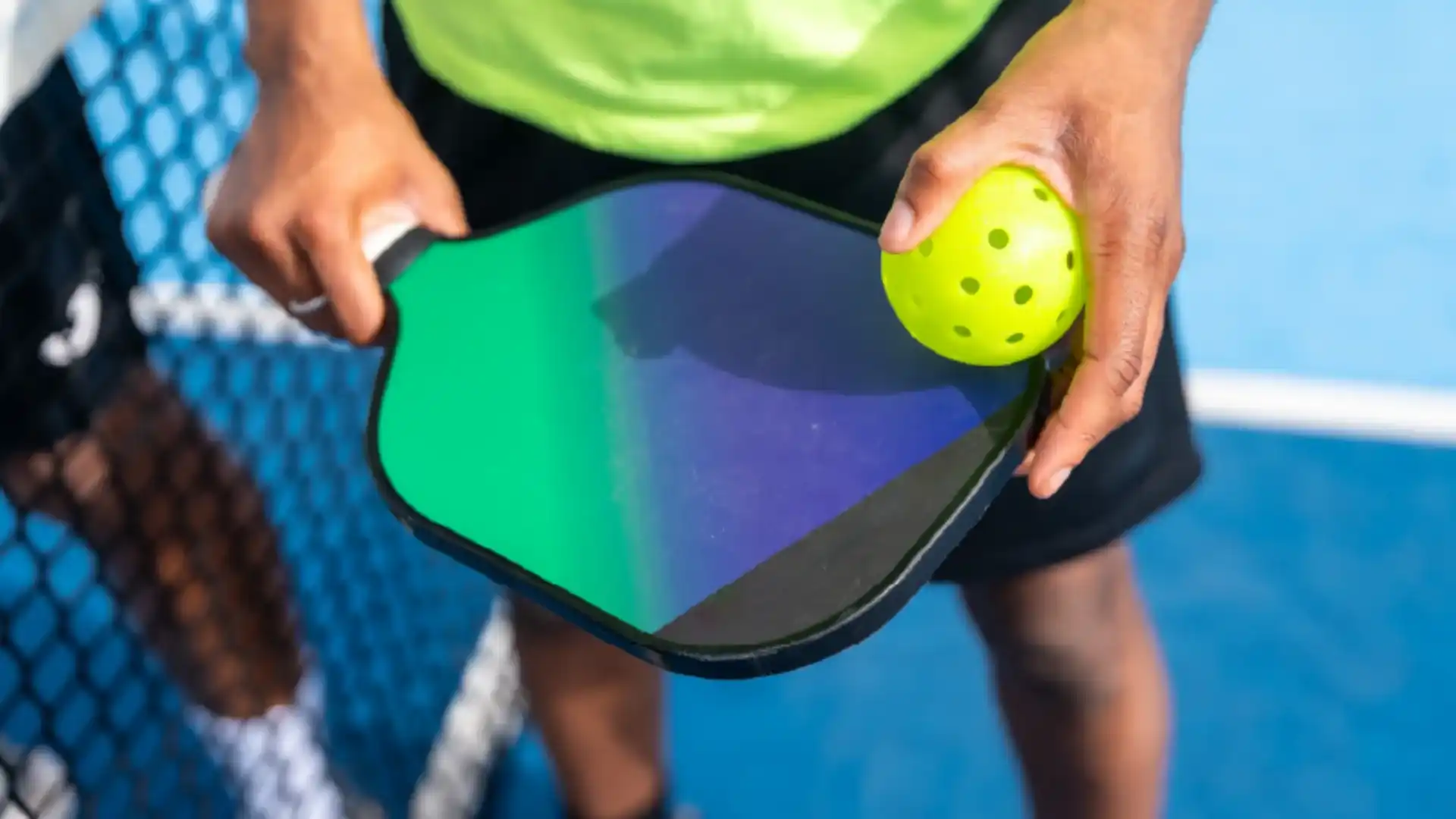
Padel is one of the fastest-growing racket sports in the world. A few years ago it was associated mainly with Spain and southern Europe; today it is spreading across Central Europe as well. New courts are appearing at sports clubs, hotels, housing estates, and private properties. Growing interest means investors ask more often: what exactly is padel, what are padel court dimensions, and how much does it cost to build a court? This article answers the key questions.
What is padel?
Padel is a racket sport that blends elements of tennis and squash. Matches are always played in doubles on a court enclosed by glass walls and a steel mesh fence. A defining feature is that the walls are part of the rally: after the ball bounces on the surface it can hit a wall and remain in play, which lengthens exchanges and gives matches a distinctive rhythm.
Unlike tennis, padel does not require years of technical training. Most beginners can play engaging rallies in their first sessions. That low entry barrier is why the sport appeals to both youth and adults.
Padel vs tennis – main differences
At first glance the two sports look similar, but several elements set them apart.
Enclosed court
The most visible difference is court construction. A padel court is surrounded on all sides by tempered glass panels and steel mesh. This is not ordinary fencing – it is an integral part of the game.
Smaller footprint
A padel court measures 20 × 10 m, so it needs considerably less space than a full tennis court. That matters for investors with limited land.
Doubles only
Padel is always played four-a-side. One court can serve more users at once than a singles tennis court.
Different racket type
Padel rackets have no traditional strings. They are solid with characteristic holes that improve aerodynamics and shot control.
Why is padel gaining popularity?
Padel’s rise comes down to several factors. Above all it is highly social: you play in pairs, which attracts friends, families, and corporate groups.
Accessibility is the second argument. Unlike tennis, beginners can enjoy the game from the first session. You do not need months of technique work to play a satisfying match.
Padel is also attractive commercially. Club owners value that one court drives more footfall and bookings typically cover four players at once.
Padel court dimensions
Official court size is defined by international padel regulations.
Core parameters:
- court length: 20 m,
- court width: 10 m,
- back wall height: 4 m,
- side wall height: 3–4 m,
- net height: 88 cm at centre and 92 cm at the posts.
When planning an investment, allow technical space around the court. In practice the minimum footprint for one court is about 21 × 11 m. With two or more courts you can use available land more efficiently.
Which surface is best for a padel court?
Surface choice directly affects playing comfort, player safety, and running costs.
Artificial turf with quartz sand infill
This is the most common solution on professional courts. It provides adequate cushioning, good grip, and predictable ball bounce.
Artificial turf without infill
Investors choose it more often for lower maintenance. Gameplay is slightly faster.
Acrylic and polyurethane surfaces
An alternative to turf. Easy to maintain and no sand top-up, but a different feel underfoot.
Modular surfaces
Typical for temporary, mobile, or event installations. Fast assembly and dismantling.
How is a padel court built?
Construction starts with a stable base, most often a concrete slab that carries the structure and ensures durability.
Steel or aluminium frames are then installed, with tempered glass panels and mesh fencing attached. Next comes the sport surface and equipment – centre net and LED lighting.
Total build time can range from a few days to several weeks, depending on scope and site conditions.
How much does a padel court cost?
Building a padel court costs more than a standard basketball or volleyball court, mainly because of the specialist glass-and-steel enclosure.
Indicative cost ranges:
- court structure with glass and mesh: from 80,000 to 180,000 PLN,
- sport surface: from 15,000 to 30,000 PLN,
- concrete base: from 15,000 to 35,000 PLN,
- LED lighting: from 15,000 to 35,000 PLN,
- additional equipment and installation.
Total cost for one outdoor court is typically from 130,000 to 280,000 PLN. Covered courts can cost significantly more.
Is a padel court a good investment?
More investors treat court construction as a business project. Padel serves four players at once, which increases rental revenue potential. Rapid growth in the sport keeps booking demand rising.
A padel court can also strengthen a hotel, housing estate, or leisure complex. For many customers it is an attractive alternative to traditional sports facilities.
Frequently asked questions
How much space does a padel court need?
Minimum footprint for one court is about 21 × 11 m including technical zones.
Can a padel court be built outdoors?
Yes. Most new projects are outdoor courts with energy-efficient LED lighting.
Which surface is best?
Sand-infilled artificial turf is the standard on professional courts.
How much does it cost to build a padel court?
Total investment is usually from 130,000 to 280,000 PLN.
Is padel suitable for beginners?
Yes. It is one of the most approachable racket sports – you can enjoy meaningful play after just a few hours.
Summary
A padel court is a modern sports investment that meets growing demand for recreational activity. Modest space requirements, strong user appeal, and revenue potential make padel courts an increasingly common part of sports infrastructure at hotels, clubs, and housing estates. A well-designed court with the right surface and lighting can serve users for many years with comfortable, safe play.